The Complete Guide to Escape Rooms
How to Play, Get Hints and Win
Escape rooms are immersive, story-driven adventures where your group searches for clues, solves puzzles and works together to complete a mission before time runs out. You might investigate a murder, recover a stolen artifact, stop a dangerous experiment or save the world—all without leaving the room.
If you have never played an escape room before, you may be wondering what to expect. Will you actually be locked inside? What happens if you cannot solve a puzzle? Do you need to be good at riddles? Will you have to play with strangers?
The short answer: escape rooms are designed to be fun, collaborative experiences—not tests of intelligence. This complete guide explains how escape rooms work, how to book and play, when to ask for hints, how to improve your chances of winning and what first-time players should know before stepping inside.
What Is an Escape Room?
An escape room is a timed, interactive game played inside a themed environment. Most games last approximately 60 minutes and are designed for small groups, although game length and group capacity can vary.
Once the game begins, your team explores the room, finds clues and solves a connected series of challenges. Every solution helps advance the story or reveals something new: a combination, key, hidden compartment, secret passage or important piece of information.
Despite the name, the objective is not always to escape. Depending on the story, your mission might be to:
- Solve a crime
- Find a missing person
- Recover a stolen object
- Stop a villain
- Prevent a disaster
- Complete an investigation
- Repair a spaceship
- Break a curse
- Discover a hidden treasure
The best escape rooms combine puzzles, detailed sets, technology and cinematic storytelling to make you feel as though you have stepped directly into another world.
How Do Escape Rooms Work?
Although every game is different, most escape room experiences follow a similar format.
1. Choose Your Game
Start by selecting a theme that appeals to your group. You may be able to choose between mysteries, adventures, thrillers, licensed stories, science-fiction missions and other experiences.
Check the game description for:
- Recommended number of players
- Difficulty level
- Age recommendations
- Scare or intensity level
- Escape room theme
- How long the escape game is
- If the experience is a public escape game or a private game
For a first escape room, the theme is usually more important than the difficulty rating. Choose a story your group is excited to experience together.
2. Book Your Escape Room
Most escape rooms require or strongly recommend booking online in advance. Popular evenings, weekends and holidays can sell out quickly.
When booking, you will typically choose:
- The location
- The game
- The date and time
- The number of players
Some escape rooms sell individual tickets and may combine smaller groups. Escapology games are always private, so your reservation is exclusively for your group. You will never be placed in a game with strangers.
3. Arrive and Check In
Plan to arrive approximately 15 minutes before your scheduled game. This gives your group enough time to check in, complete any required waivers and receive instructions without feeling rushed.
Late arrivals may lose playing time or be unable to enter once the experience has started, so confirm the arrival policy before your visit.
4. Meet Your Game Master
Before the game, a game master will explain the rules, introduce your mission and tell you how to request hints.
Listen carefully. The introduction may include important information about:
- Your objective
- Items that are not part of the game
- Objects you should not touch or move
- How locks, props or technology work
- Emergency exit procedures
- The escape room hint system
Your escape game master will monitor the experience and can help if your team becomes stuck or encounters a technical issue.
5. Search, Solve and Communicate
Once the clock starts, begin exploring the escape room. Look for unusual objects, patterns, symbols, numbers, written messages and connections between different items.
As your team solves puzzles, new parts of the game will become available. This may happen through a traditional lock, an electronic trigger, a hidden compartment or a secret doorway.
The puzzles usually build toward a final solution that completes your mission.
Are You Really Locked in an Escape Room?
Modern escape rooms are designed with guest safety in mind. The entrance to the game room will always remain unlocked, and may also include an emergency exit button, to allow players to leave through a clearly marked exit.
You are not expected to remain inside if you feel uncomfortable or need to leave. You can exit at any time if you need to use the restroom, speak with a team member or simply take a break.
Leaving the room may affect your game time, but your comfort and safety always come first.
What Happens If You Cannot Solve a Puzzle?
You ask for a hint! Hints are a normal part of escape rooms, especially for first-time players. Your game master at Escapology is always a human in the venue and can help your group recognize something you missed, understand how clues connect, or determine what to focus on next.
A hint should move you forward without taking away the satisfaction of solving the entire puzzle yourself.
While hint policies vary at other escape rooms, Escapology doesn't limit the number of hints or apply a time penalty for using them. You'll never feel stuck.
When Should You Ask for a Hint?
Ask for a hint when your group has stopped making meaningful progress. A good rule is to request help if:
- Everyone has searched the same area several times
- Your team has no unsolved clues to investigate
- You have a clue but cannot determine what it relates to
- You keep repeating the same unsuccessful idea
- The group has been stuck for several minutes
- Frustration is beginning to replace fun
Before requesting a hint, pause and make sure everyone has shared what they found. Often, one player is holding the clue another player needs. Hints are not a sign that you are bad at escape rooms. They are part of the experience and help keep the story moving.
Do You Have to Be Smart to Play an Escape Room?
Escape rooms do not require specialized knowledge, advanced math skills or trivia expertise. Unless the game description says otherwise, everything you need to solve the experience should be available inside the room.
Different players notice different things. One person may recognize a pattern, another may find a well-hidden object and someone else may suddenly understand how two clues connect. Strong escape room teams usually succeed because they:
- Communicate clearly
- Listen to one another
- Stay organized
- Try different approaches
- Ask for help when needed
You do not need to be the smartest person in the room. You simply need to participate and communicate.
Are Escape Rooms Kid-Friendly?
Many escape rooms are appropriate for children and families, but suitability depends on the individual escape game theming.
Before booking, check:
- The recommended minimum age
- Whether an adult must participate
- The game’s difficulty level
- Whether the theme includes frightening imagery
- Whether the room has low lighting, loud sounds or intense moments
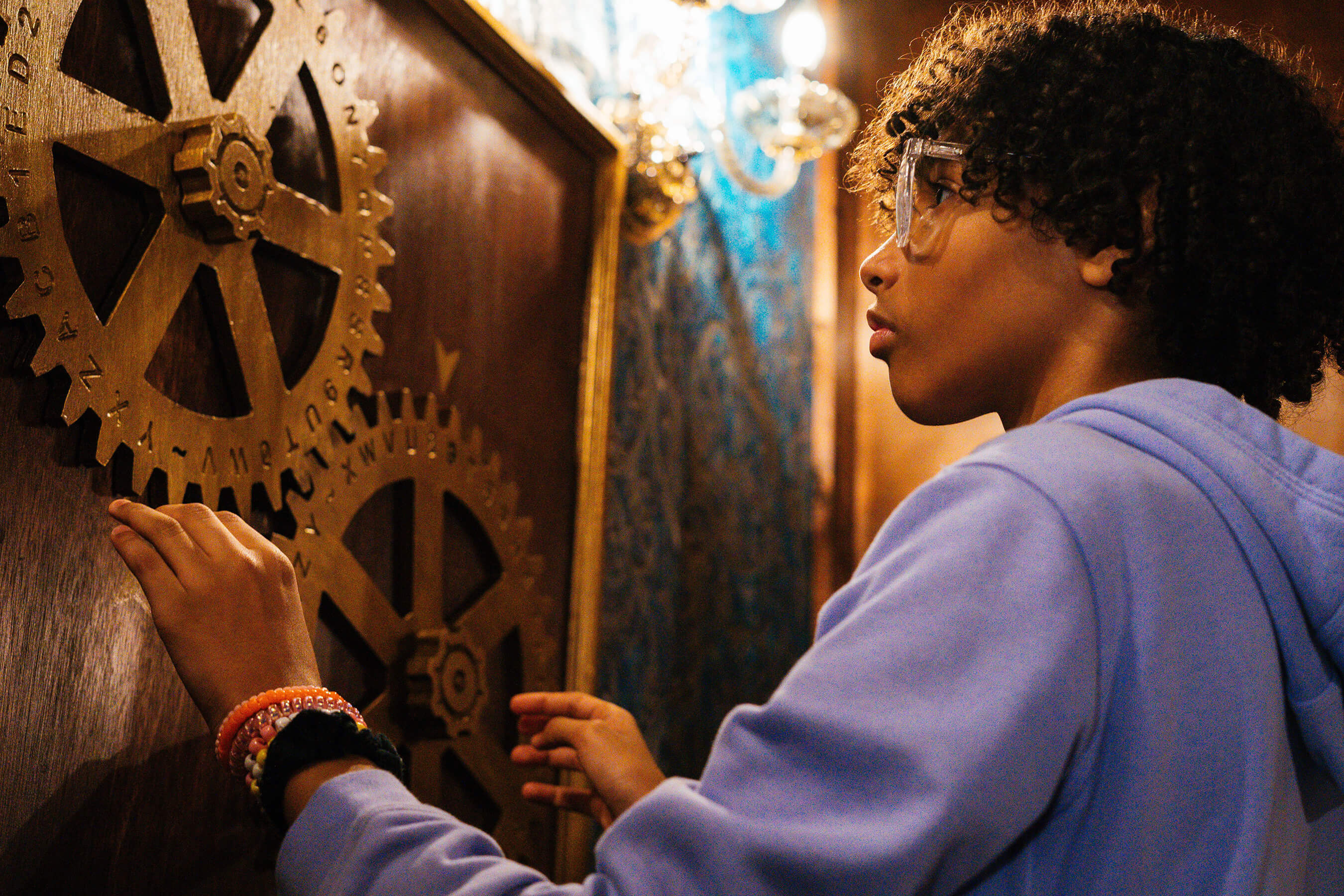
Children are often especially good at escape rooms because they explore freely, notice unexpected details and are willing to try creative ideas. Escapology offers family-friendly adventures, and many locations also offer KIDS MODE, with hints and guides designed specifically for children ages 7–12. KIDS MODE uses the same immersive rooms adults play, with the experience adjusted to help younger players take the lead.
Will You Have to Play With Strangers?
That depends on the escape room’s booking policy. Some companies use public bookings, which means multiple groups can purchase tickets for the same session. If your group does not fill the available capacity, other guests may join you.
Other companies offer private bookings. At Escapology, every game is always private. Whether you book for two people or bring a larger group, you will only play with the people you invited. If playing privately is important to you, confirm the venue’s policy before making a reservation.
What Types of Puzzles Are in Escape Rooms?
Escape room puzzles vary widely, but common examples include:
- Finding hidden objects
- Matching patterns or symbols
- Decoding messages
- Arranging items in the correct order
- Solving word or number puzzles
- Using keys or combinations
- Identifying differences between images
- Following maps or directions
- Manipulating physical objects
- Activating electronic or magnetic triggers
- Connecting information found in different areas
- Completing multi-step challenges
Well-designed rooms use a mixture of puzzle types so different members of the group have opportunities to contribute.
How to Win an Escape Room: 12 Practical Tips
There is no single trick that guarantees a win, but these strategies can make your team significantly more effective.
1. Listen to the Entire Introduction
The story explains what you are trying to accomplish. The rules tell you how to interact with the room. Missing either can cost valuable time.
2. Search the Room Methodically
Check shelves, books, pictures, containers and objects that appear unusual. Look high and low, but follow the rules and never use excessive force. Do not assume every decorative object contains a secret. Your game master will tell you what is off-limits.
3. Say Everything Out Loud
When you find something, announce it.
“Here is a key.”
“I found four symbols.”
“This box needs a five-letter word.”
Sharing information helps the team connect clues that were found in different parts of the room.
4. Spread Out at the Beginning
A group does not need five people searching the same drawer. Divide the room into sections so you can identify useful items quickly. Once puzzles become available, players can regroup based on what needs to be solved.
5. Keep Unused Clues Together
Create a designated area for items that have been found but not yet used. This makes it easier to see what information is still available. Avoid carrying clues around unnecessarily. An important object cannot help the team if it disappears into someone’s pocket.
6. Separate Used and Unused Items
Once an item has served its purpose, place it in a separate area. Many escape rooms use an object only once unless the game master tells you otherwise. This prevents your team from repeatedly trying the same key or code.
7. Match Clues to Inputs
If you find a four-digit number, look for a four-digit lock or keypad. If you discover a sequence of colors, look for something that accepts colors in a particular order. The format of an answer often helps reveal where it belongs.
8. Do Not Overthink Every Puzzle
Most escape room puzzles are based on observation, logic and connections between items in the room. You generally will not need obscure historical facts or a complicated mathematical formula. Start with the most direct interpretation before searching for a more elaborate answer.
9. Let Someone Else Try
If you really feel you have the right answer but your approach is not working, invite another player to look at the puzzle. A fresh set of hands or perspective can reveal an assumption you did not realize you were making.
10. Manage the Clock
Do not let the time pressure make you panic, but check the clock periodically. If the group has spent too long on one puzzle, switch solvers or request a hint.
11. Enter Codes Carefully
Before deciding an answer is wrong, check that you entered it correctly and used the proper orientation. For traditional locks, gently pull or press the lock after aligning the code. Never force a lock or prop.
12. Use Your Hints
A hint that keeps your group moving is more valuable than ten minutes spent staring at the same clue. The goal is to experience the story, solve as much as possible and have a great time together.
What are the best escape room themes?
Mystery and Detective Games
Players investigate a crime, follow evidence and uncover the truth. Murder mysteries, missing-person cases and detective stories are especially popular because puzzle-solving fits naturally into the investigation. At Escapology, try Crime Scene or Mansion Murder or Budapest Express for this a mystery dectective escape game.
Adventure and Treasure Hunts
These games send players in search of a lost city, ancient artifact, pirate treasure or forgotten civilization. Expect maps, hidden chambers and larger-than-life discoveries.
Heists
Your team may need to steal a valuable object, expose a criminal or complete an impossible robbery. Escape room art heist games often involve security systems, secret plans and clever misdirection.
Horror and Haunted Houses
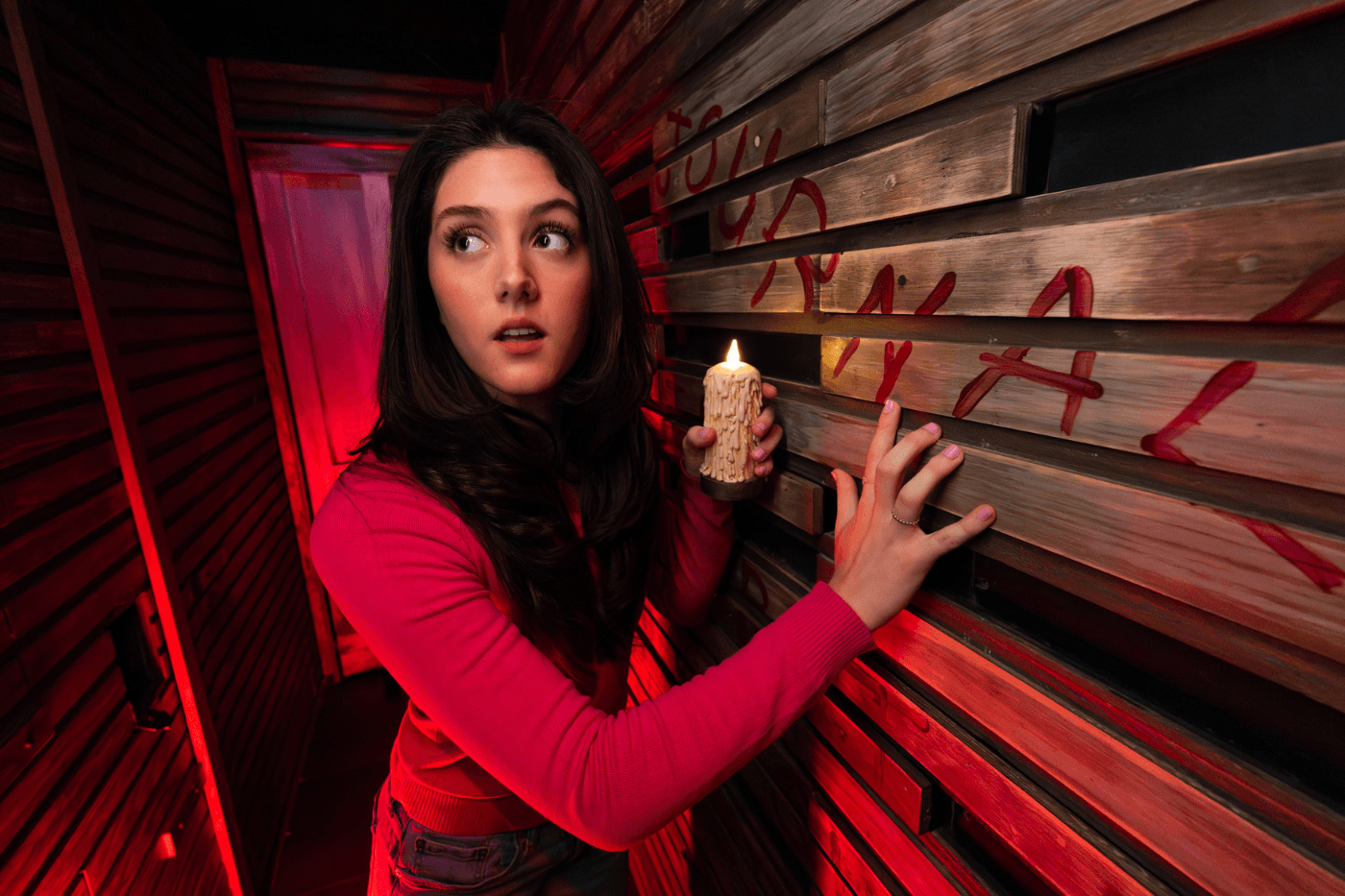
Horror escape rooms use atmosphere, suspense and frightening stories to create a more intense experience. Scare levels vary significantly, so confirm whether a game includes live actors, jump scares or graphic content before booking. For those who like scary escape rooms, Escapology's Haunted House, and 7 Deadly Sins are popular choices.
Science Fiction
Spaceships, futuristic laboratory escape rooms, time travel and extraterrestrial mysteries give designers opportunities to incorporate imaginative technology and unexpected effects.
Spy and Espionage Missions
Players become secret agents tasked with decoding intelligence, stopping an enemy or preventing a global crisis. Try Cyber Heist to take on a hacker or Under Pressure for a high stakes submarine escape room.
Historical Adventures
These rooms place players inside another era or build their stories around famous events, people and works of fiction. Escapology's catalog includes historical escape rooms such as Cuban Crisis, Shanghaied, Arizona Shootout, and Mayday.
Licensed Entertainment
Licensed escape rooms bring recognizable movies, television programs, books and characters to life. Escapology adventures include stories inspired by Batman™, Scooby-Doo™, Now You See Me, Star Trek and Agatha Christie's Murder on the Orient Express.
When Should You Do an Escape Room?
Escape rooms work well for occasions when people want to do something together rather than simply watch or attend an event.
Popular occasions include:
Date Nights
An escape room gives couples something new to talk about and solve together. It is interactive, memorable and much less predictable than another dinner-and-a-movie night.
Birthdays
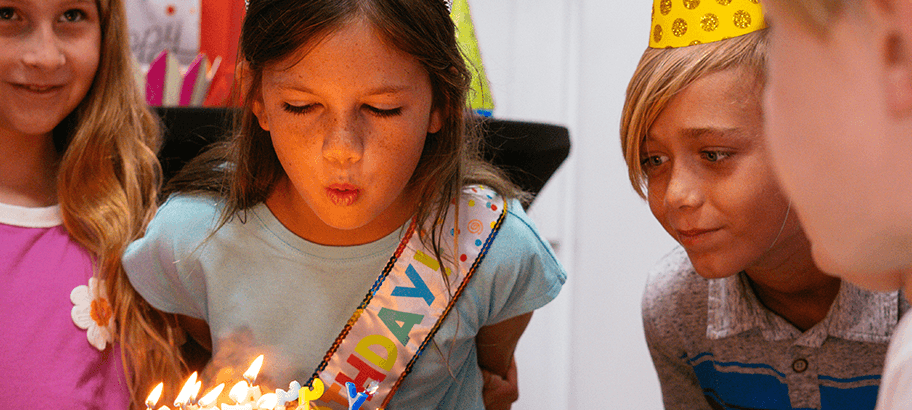
Escape rooms turn a birthday into a shared adventure. They work for children, teenagers and adults, and many locations offer party areas or group packages.
Family Outings
Families can put away their phones, step into a story and work toward a common goal. Different generations often contribute in completely different—and equally valuable—ways.
Team-Building Events
Escape rooms naturally encourage communication, delegation, creative thinking and collaboration. They also give coworkers a shared experience that does not feel like another meeting.
Bachelor and Bachelorette Parties
An escape room can be the main event or an energetic first stop before dinner and other celebrations.
Anniversaries
For couples who value experiences over traditional gifts, an escape room creates a new story to remember together.
School Breaks and Vacation Days
Escape rooms offer an indoor activity that is not dependent on the weather and can engage both adults and children.
Tourist Activities
Visiting an escape room can provide a welcome break between sightseeing activities, especially during extremely hot, or cold days and can be one of the best rainy day activities.
Just Because
You do not need a special occasion. Escape rooms are ideal for friend groups looking for something more interactive than going to a movie, restaurant or bar.
A Brief History of Escape Rooms
Modern escape rooms grew out of “escape-the-room” video games in which players explored a digital environment, discovered objects and solved puzzles to progress. One of the earliest widely recognized real-life escape game experiences was created in Kyoto, Japan, in 2007. The format later spread throughout Asia, Europe and North America, reaching the United States in the early 2010s. That progression can be traced from online games to physical, collaborative attractions.
Early escape rooms, including early Escapology games created in 2010 when our first venue opened in Orlando, FL, often relied on hidden keys, combination locks and relatively simple sets. As the industry developed, the experiences became more theatrical and technologically advanced. Detailed environments, electronic triggers, special effects, secret passages and licensed entertainment properties helped transform escape rooms from puzzle-filled rooms into complete immersive adventures.
The industry’s growing popularity also reflected a wider interest in interactive entertainment: experiences where guests become active participants rather than passive spectators. There has been a rapidly growing appetite for physical, participatory storytelling.
The Rise of Virtual Escape Rooms During COVID-19
The COVID-19 pandemic temporarily closed many physical escape room venues in 2020. In response, creators adapted the format for people playing from home. Virtual experiences took several forms:
- Live, avatar-led games in which an employee moved through a physical room on behalf of remote players
- Browser-based digital escape games
- Printable puzzle adventures
- Video-call experiences hosted through platforms such as Zoom
- Online mysteries using websites, videos, emails and digital evidence
Virtual escape rooms allowed separated friends, families and coworkers to continue solving puzzles together. They were also adopted by schools, libraries and training programs as remote learning activities. Virtual escape rooms were a popular at-home activity during the early months of the pandemic, and an industry survey found that hosted livestream games were among the most common new products developed by escape room operators in 2020.
When physical venues reopened, many players returned to in-person games for the tactile environments and face-to-face teamwork. However, virtual escape rooms demonstrated that the format could extend beyond a physical room and connect players across different locations.
Escape Room FAQs
How long does an escape room take?
Most games provide approximately 60 minutes of playing time. Plan for 75–90 minutes at the venue to allow time for check-in, instructions and a post-game photo.
How many people do you need?
Capacity varies by game. Many rooms can be played by two people, while larger games may accommodate up to eight or more. A group of four to six often provides a comfortable balance between having enough perspectives and giving everyone space to participate.
Can two people play an escape room?
Yes. Many escape rooms can be played by two people, although the experience may be more challenging because fewer people are available to search and solve simultaneously.
Are escape rooms scary?
Not necessarily. Most escape rooms can be adventurous, mysterious, funny, and suspenseful. For those who want to be frightened, look specifically for a theme and intensity level that gives your group that experience.
Are escape rooms physically demanding?
Most are not. Escape rooms generally focus on observation, communication and problem-solving rather than strength or athletic ability. Contact the venue if you have specific mobility or accessibility questions. The staff will be able to tell you of any games with puzzles that are hard to reach, rely on colors, have flickering lights, or may provide specific accessibility issues.
Can you leave during the game?
Yes. Reputable escape rooms provide a way for guests to leave if necessary. At Escapology, you are never actually locked inside.
What happens when time runs out?
The game master will end the experience and let your group out. Depending on the venue, they may explain the remaining puzzles or preserve the ending so you can attempt the game again.
Do escape rooms have unlimited hints?
Hint policies vary. Escapology offers unlimited hints so groups can receive assistance whenever they need it.

Do escape rooms put you with strangers?
Some do. Escapology games are always private, so you will only play with the people included in your reservation.
Can children play?
Yes, depending on the game and venue policy. Check the age recommendation and whether an adult must participate. Select Escapology locations also offer KIDS MODE for younger players.
Can you take photos inside?
Most venues do not permit photos or videos inside the games because they could reveal puzzles to future players. There is usually an opportunity to take a team photo after the experience.
What happens if we do not escape?
You still played the full experience, contributed to the mission and probably created a few stories your group will be retelling afterward. Winning is exciting, but it is not the only measure of a great escape room.
What Should You Wear to an Escape Room?
Wear comfortable clothes and shoes that allow you to move easily. Escape rooms usually do not require strenuous physical activity, but you may need to stand, walk, bend or reach during the game. Avoid overly restrictive clothing or shoes that are uncomfortable for an hour of standing. Costumes are usually unnecessary, although some groups enjoy dressing to match the theme.
What Should You Bring?
In most cases, you only need:
- Your booking confirmation
- Any required identification
- Comfortable clothing
- Your teammates
- A willingness to participate
You should not need outside tools, calculators or reference materials. Phones, cameras and personal belongings may need to be kept in your purse of pocket to protect the puzzles and prevent spoilers.
Ready to Step Into Your First Escape Room?
Your first escape room does not require special knowledge or hours of preparation. Choose a story, gather your favorite people and be ready to search, communicate and try ideas together. You may uncover the crucial clue. Someone else may solve the puzzle everyone thought was impossible. And one member of the group may claim the title of hero on the way home.
Choose your adventure and book an always-private escape room at an Escapology location near you.